Ask Me Anything: what we learned from 10,000 patient questions
28 Oct 2026

A patient recovering at home after a treatment often has questions. When can I ride a bike again? How long should I apply ice? I see blue discolouration, is this normal? These questions don't come up when the clinic is open, but in the evening on the sofa or over the weekend. They are rarely urgent. Even so, as a patient you want to know quickly where you stand.
That is why the 'Ask Me Anything' functionality was developed. This is an AI assistant in the Caro app where patients can ask questions about their treatment at any time of day. The AI assistant has now answered more than 10,000 questions.
How 'Ask Me Anything' works
The AI assistant answers questions based on the information in the patient's care pathway. These questions are mostly about practical matters and the answer is often already in the app. Even so, patients are looking for reassurance, or cannot find the information themselves.
The AI assistant only uses information approved by the clinic and does not pull knowledge from the internet. The assistant also makes no medical diagnoses. Does a question fall outside the care pathway, for instance because it is about medication or because there is an indication of a possible complication? Then the conversation can be handed over to a staff member along with the conversation history, so the patient doesn't have to repeat their story.
That's how it works in theory, but what do 10,000 patient questions teach us in practice? We have listed the three main lessons, based on the experiences at three clients: MK Velsen, Andros Clinics and SkinSurgery.
Lesson 1: age is not a barrier
MK Velsen was the first clinic to get started with the AI assistant. In the meantime, patients undergoing orthopaedic surgery have asked around 4,000 questions in total.
One of the lessons we learn from MK Velsen is that age is not a barrier to use. The adoption rate of the AI assistant is 58.8%: of patients with a treatment date from 1 January 2026 onwards, 315 out of 536 patients asked at least one question to the AI assistant. People over sixty even use the assistant slightly more often than patients under 40: 60.9% compared to 47.1%.
That fits into a broader picture. According to Statistics Netherlands (CBS), 94% of people aged 65 to 75 are online daily, and for those aged 75 and over, it is also nearly three-quarters (*CBS, 2025).
Lesson 2: chat takes on a different role
At the end of 2025, Andros Clinics also began introducing the AI assistant into the Vasectomy care pathway. This treatment accounts for more than half of the total number of questions asked. The AI assistant is now live across 10 different care pathways at Andros.
In the meantime, more than 4,500 questions have come in from 1,800 different users. On average, 90% of these questions were handled independently by the AI assistant.
This also changes the nature of the clinic's chat. The questions that still come in there are more often substantive medical queries, for example regarding potential complications. Moreover, the practical questions that do reach a staff member highlight where the care pathway is still lacking information. In this way, information provision becomes increasingly comprehensive, allowing the AI assistant to answer more and more questions on its own.
“The AI assistant answers the frequently asked questions; we are there for personal care”, says Marieke Kalshoven, nursing team leader at Andros Clinics.
Lesson 3: accessibility knows no hours
Across all clinics, 57% of questions were asked outside office hours. It is precisely at these times that the clinic cannot be reached, leaving patients with unanswered questions until the following morning.
Patients across the various clinics highlight this as one of the benefits, as shown by the evaluations. “You are not dependent on working hours to find something out”, writes one patient.
The low barrier to getting in touch is also appreciated. For example, a patient at SkinSurgery notes: “With some practical questions, I sometimes feel hesitant to contact the clinic. This way, you can ask different questions at different times and get a quick answer”. It is precisely for this reason that the AI assistant was designed.
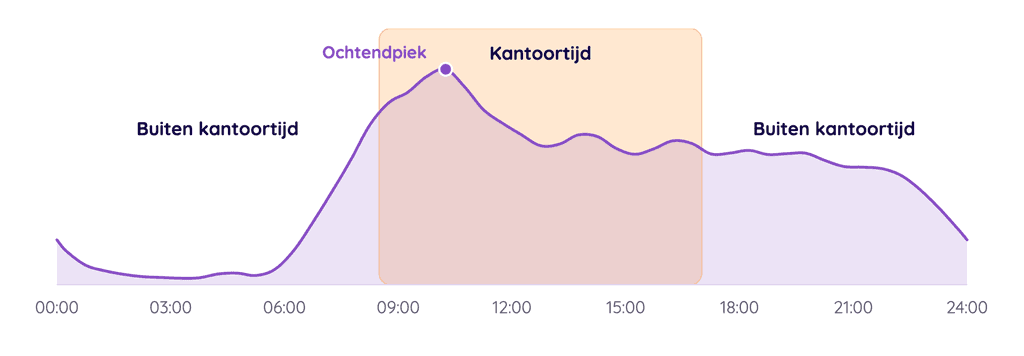
Number of questions to the AI assistant, across all clinics (1 Nov 2025 to 20 Oct 2026).
What the data shows us
At the clinics, the AI assistant now answers nearly nine out of ten questions independently. The team saves time for questions that truly require a healthcare provider. And patients, regardless of age, receive an immediate answer the moment they have questions.
Curious to find out more?
Want to know what Ask Me Anything would look like in your clinic? Get in touch with us or request a demo.
*Source: CBS, Digitalisation and knowledge economy 2025. Daily internet use in 2025: 94.3% of people aged 65 to 75 and 72.6% of those aged 75 and over.
All figures in this article are anonymised, total usage figures per clinic. The data cannot be traced back to individual patients.


Want to know more about how Caro can work for you?
Effective care requires innovative solutions. Discover what we can achieve together.
